Nobody Warns You About the Ice-Water Flinch: What Tooth Sensitivity in Oakville Is Really Telling You

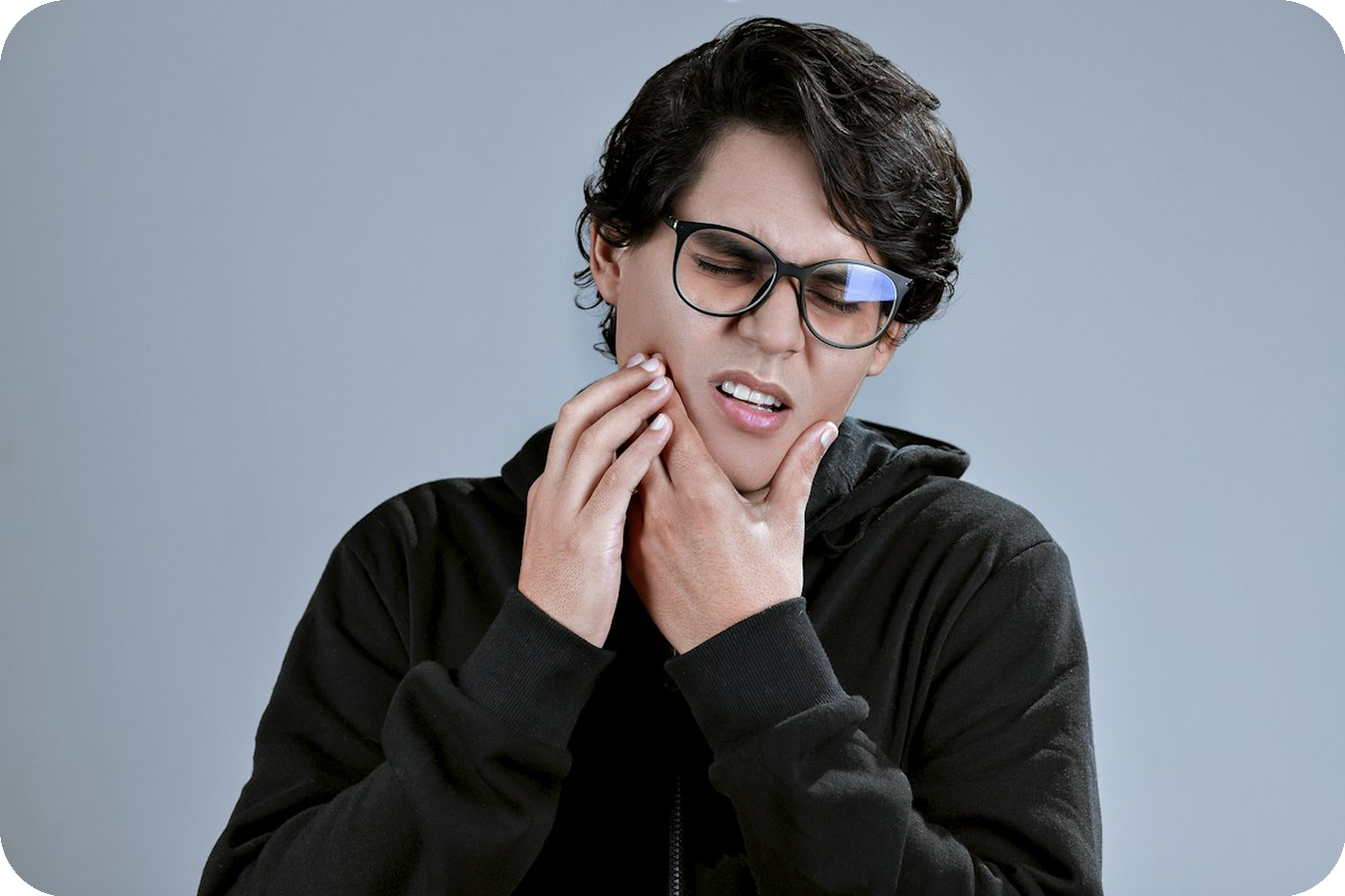
You take a sip of ice water and — zing. That short, sharp jolt is so ordinary that most people just start chewing on the other side and carry on for years. But tooth sensitivity in Oakville and Burlington isn't something you're stuck with, and it's almost never random. It's your tooth telling you that the shield over its nerve has been worn thin, pushed back, or cracked open somewhere. The good news: once a dentist in Oakville works out which of the five usual culprits is behind it, most sensitivity is fixable — often with the gentlest option on the list.
What Tooth Sensitivity in Oakville Actually Is — and Why It Zings
Under your enamel sits a softer layer called dentin, and dentin is riddled with microscopic tubules that run straight to the nerve. While enamel and gum tissue cover it, you feel nothing. Expose the dentin — by wear, erosion, recession or a crack — and cold, heat, sweetness and even a blast of winter air travel down those tubules and set the nerve off. That's the zing.
Dentists call it dentin hypersensitivity. The Canadian Advisory Board on Dentin Hypersensitivity, publishing its consensus recommendations in the Journal of the Canadian Dental Association, defines it as a short, sharp pain arising from exposed dentin that can't be blamed on any other dental defect or pathology — and notes that reviews have put its prevalence anywhere from 8% to 57% of the general population.
Two things follow from that. First, you are in very large company. Second — and this is the part patients miss — sensitivity is a symptom, not a diagnosis. The fix depends entirely on the cause.

The 5 Real Causes of Tooth Sensitivity in Oakville
1. Receding Gums — the Most Common Cause of Tooth Sensitivity in Oakville
Gum tissue can creep back from years of scrubbing too hard with a firm brush, from grinding, or from gum disease. What's underneath is root surface, and roots were never covered in enamel — they're dentin from the start. That's why recession sensitivity tends to arrive suddenly and feel worst right at the gumline.
2. Enamel Erosion From Everyday Acids
Sparkling water, citrus, wine, pop, sports drinks, cider vinegar in the morning — all of it softens enamel briefly. Do it several times a day, every day, and the enamel thins for good. Brushing straight after something acidic makes it worse, because you're scrubbing softened enamel. Wait half an hour, and rinse with plain water in the meantime.
3. Night-Time Grinding and Clenching
Grinding flexes teeth at the gumline and wears flat spots through the biting surface, exposing dentin from two directions at once. Most people who grind have no idea they do it — the giveaways are morning jaw tightness, headaches at the temples, or a partner who hears it. If that's you, a custom night guard usually settles the sensitivity because it stops the cause. We covered the full picture in our guide to
4. A Crack or a Failing Filling
This one feels different. Instead of a cold zing that fades, you get a sharp pain when you bite down — or, tellingly, when you let go. An old filling that's leaking at the margin does the same thing. Cracks don't heal, and they tend to get more expensive the longer they're left, so this is the cause worth acting on quickly.
5. Decay Getting Close to the Nerve
A cavity working its way through enamel eventually reaches dentin, and then the nerve starts complaining. The warning sign here is duration: if cold pain lingers for 30 seconds or more after the cold is gone, or wakes you at night, that's not ordinary sensitivity anymore.
When to Stop Waiting and Call a Dentist in Oakville
Mild, brief sensitivity that's been the same for years can wait for your next hygiene visit. Book sooner if you notice any of the following:
Pain that lingers for 30+ seconds after cold or heat is gone
Pain on biting or releasing — a classic cracked-tooth signal
Sensitivity in one specific tooth rather than a general area
Night pain that wakes you or needs painkillers
A visible notch, dark line or hole at the gumline or on the chewing surface
Swelling, a bad taste, or a bump on the gum — treat this as urgent
The last one belongs in our emergency dental guide for Burlington & Oakville — don't sit on it.
How a Dentist in Oakville Treats Tooth Sensitivity — Gentlest Step First
Good sensitivity care works like a ladder: start at the bottom rung that can plausibly solve your cause, and only climb if it doesn't. Most patients never get past the first three rungs.

Desensitizing toothpaste with potassium nitrate or stannous fluoride quietens the nerve over two to four weeks — the trick is using it every day and not rinsing it away straight after. In-office fluoride varnish seals the tubules and takes about five minutes at the end of a cleaning. Where a root surface is genuinely worn into a notch, a thin layer of bonding covers it permanently. Where grinding is the driver, a night guard fixes what toothpaste can't. And where the cause is decay or a crack, a filling, crown or root canal is what actually ends the pain.
Why Your Cleaning Shouldn't Make Tooth Sensitivity in Oakville Worse
Here's the catch-22 that keeps sensitive patients away from the dentist: the appointment that should help is the one they dread most. Traditional hand scaling on already-exposed roots is genuinely uncomfortable, so people stretch six-month recalls into three-year gaps — and the recession, tartar and decay quietly get worse.
That's the whole reason we cleaned house on our hygiene setup. At Dental Edge we use Air Flow and Piezo technology instead of scraping: a fine, warm spray of water and powder lifts biofilm and stain off the tooth and just below the gumline, with gentle ultrasonic assistance where tartar needs it. There's no metal hook dragged across a sensitive root. Patients who used to grip the armrest tell us it's the first cleaning that didn't make them flinch — we wrote about it in detail in our guide to pain-free dental cleaning for sensitive teeth.
What Sensitivity Treatment Costs in Oakville & Burlington
Fees in Ontario are guided by the ODA Suggested Fee Guide, and most dental plans cover a good share of the treatments below. These are typical local ranges rather than quotes — the exact fee depends on the tooth, the surfaces involved and your plan, so ask us for an itemized estimate before anything starts.
Desensitizing toothpaste: about $8–$15 at the pharmacy
In-office fluoride varnish: roughly $30–$60, often added to a hygiene visit
Bonding over an exposed root: roughly $150–$400 per tooth
Custom night guard: roughly $500–$900
Filling: roughly $150–$450 depending on size and material
Crown: roughly $1,100–$1,800
Root canal: roughly $700–$1,600 depending on the tooth
If you're covered under the Canadian Dental Care Plan, several of these are claimable — we explain what CDCP covers in our CDCP guide for Burlington & Oakville patients.
Frequently Asked Questions About Tooth Sensitivity in Oakville
Why do my teeth suddenly hurt when I drink something cold?
Because dentin — the layer under your enamel — has become exposed somewhere, usually through gum recession, enamel erosion, grinding, a crack or decay. Cold travels through microscopic tubules in the dentin and irritates the nerve, producing a short, sharp zing.
Does tooth sensitivity go away on its own?
Sometimes, if it followed a one-off trigger like a whitening treatment or a recent filling — those usually settle within a few days to a couple of weeks. Sensitivity that has lasted more than a month, or that's getting worse, has an underlying cause that won't resolve by itself.
Does sensitive toothpaste actually work?
Yes, for most mild-to-moderate cases, but it needs consistency: twice daily for two to four weeks before you judge it. Rub a little onto the sensitive spot with a fingertip at bedtime and don't rinse afterwards. If there's no improvement after a month, the cause is likely structural and needs an exam.
Can teeth whitening cause tooth sensitivity?
Temporarily, yes — whitening gel passes through enamel and can leave teeth reactive for a few days. It's not damaging enamel. Spacing out sessions, using a desensitizing toothpaste for a week beforehand and applying fluoride afterwards keeps it manageable.
How much does it cost to treat sensitive teeth in Oakville?
Anywhere from about $8 for a tube of desensitizing toothpaste to $30–$60 for in-office fluoride, $150–$400 for bonding over an exposed root, or $500–$900 for a night guard if grinding is the cause. Restorative work like fillings, crowns or root canals costs more and is usually plan-covered in part.
How soon can I see a dentist in Oakville about sensitive teeth?
Usually within a few days at Dental Edge, and same-day if you're in real pain. Call 289-816-3288 or book online — we're at 5515 North Service Road in Burlington, minutes from Oakville along the QEW at Burloak.
Book With a Gentle Dentist in Oakville & Burlington
Living around a sensitive tooth is a habit, not a treatment plan — and the causes behind it rarely stay still. A twenty-minute exam is usually all it takes to identify which of the five culprits is yours and to start on the gentlest fix that will actually work.
Dental Edge is at 5515 North Service Road, Burlington, ON L7L 6G4 — right by the QEW and Burloak, on the Burlington–Oakville boundary and easy to reach from either city. Call 289-816-3288 or book online at dentaledge.ca and let's get that zing sorted.
Open Monday and Wednesday 9–5, Tuesday and Thursday 10–6, Friday 9–5, and Saturday 9–4.